
November’s Sustainability spotlight is Joline Lock. This summer, Joline served as a critical partner, working alongside Sustainability, Athletics, and Building Services to improve recycling collection in the Joyce and Compton Athletic spaces by way of improved waste station signage. For recycling to be successful, clear branding and messaging are just as important as the operational logistics themselves. With Joline’s support, newly labeled recycling and landfill bins can now be found in paired stations throughout the Joyce and Compton to collect high-value materials, primarily cans and bottles.
Notre Dame Sustainability sat down with Joline to hear her perspective on the process of creating these waste station updates.
Please briefly describe your role.
I am a Senior Interiors Project Manager within Planning, Design & Construction (PDC) at the University. I am one of four Interiors Project Managers (IPM) on campus, each with our own project portfolios and areas of focus. Our department works collaboratively across campus to create functional, beautiful, and cohesive environments that support the University’s mission. My portfolio includes academic spaces and classrooms, residence halls, athletic facilities, administrative offices, and chapels. Expanded responsibilities also include classroom planning, campus-wide standards development, and cross-departmental initiatives. I work closely with various campus partners to identify opportunities for improvement, streamline processes, and support broader University goals.
How does your role overlap with recycling operations on campus?
All Interiors Project Managers partner with end users, Sustainability, and Building Services to determine the selection, placement, and appearance of waste and recycling containers throughout campus. My expanded role has involved working more extensively with Sustainability, Athletics, Building Services, and other campus partners to help establish campus-wide landfill and recycling standards. Together, we have developed and are implementing more consistent standards for container types, colors, signage, messaging, and placement. While each department has its own operational needs, creating a consistent visual approach helps reinforce recycling practices and makes it easier for students, faculty, staff, and visitors to understand where and how to dispose of their waste. These containers are an important part of the overall campus environment, and our goal is to ensure they are functional, visually consistent, easy to identify, and appropriate for each space.
Positive changes have occurred because of your collaborative work with recycling. What does it mean to you to be able to make this impact for campus?
It is rewarding to see what can happen when different departments come together with a common goal. We have a great team of people who are passionate, thoughtful, and committed to improving sustainability practices across campus. These improvements may seem like small details, but they can have a meaningful impact on the overall campus experience. Creating more consistent and recognizable recycling stations helps eliminate confusion, encourages better recycling habits, and makes sustainability a more visible part of everyday campus life. I am grateful to be part of this effort and to have the opportunity to contribute to a mission that makes a positive and lasting impact on our campus community.
What other sentiments do you have about the process of improving recycling collection for the athletics spaces?
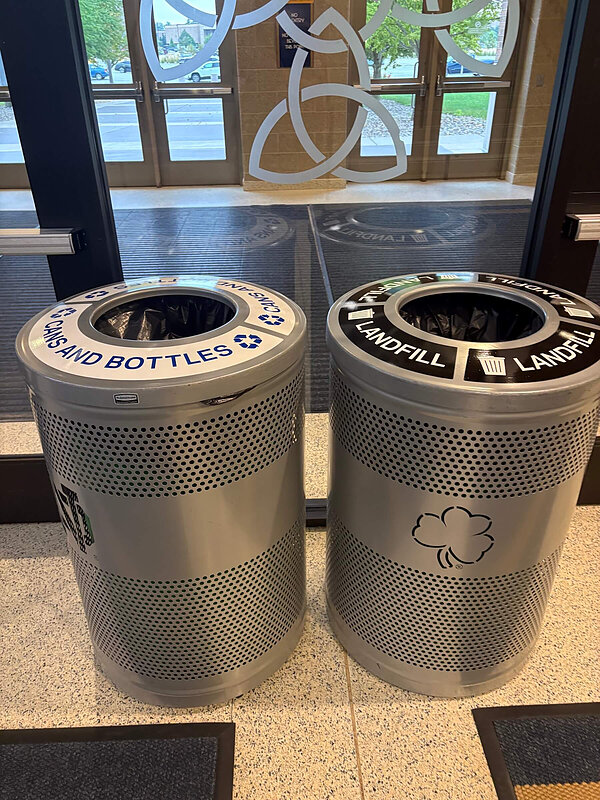
I think one of the biggest takeaways from this project has been the importance of communication, collaboration, and having great partners who are willing to go the extra mile. There are many moving pieces behind what may appear to be a simple change, from determining placement to signage, labeling, and installation. It takes everyone working together to ensure the final solution works both aesthetically and operationally.
The Joyce Center and Compton project was a great example of teamwork and what can be accomplished when everyone comes together with a common goal. We had a very aggressive timeline to remove and replace the existing decals on approximately 200 landfill and recycling containers. We had just three weeks for Building Services to remove the old decals while Valley Screen, a local signage company, developed and produced the new signage, followed by only two weeks for Valley Screen to install all 200 new decals. I want to recognize Valley Screen, Austin Poyar from Sustainability, David Gilbert from Athletics, and our Building Services team. Without everyone’s dedication, commitment, and willingness to work together, we would not have met the deadline.
Can you share with us why enhancing and unifying campus waste aesthetics is important? What are some of the moving pieces behind it, as well as the motivations?
From an Interiors perspective, even something as simple as a trash or recycling container plays a part in the overall look and feel of a space. We spend a lot of time selecting furniture, finishes, and other details to make our campus spaces look and function at their best. Waste and recycling containers should be considered part of that as well. Not every space is the same, and what works in an athletic facility may not work in a dining hall, classroom, or residence hall. That is why working with each department is so important. We want to understand the needs of each space and find solutions that work best, while still keeping the messaging consistent across campus. This helps create a recognizable look and makes it easier for people to identify and use the recycling stations wherever they are. What is important is making recycling easier, helping people make the right choices, and taking pride in the campus we all share. I believe the little details matter, and when everyone works together, those little changes can make a big difference.
What is one sustainability tip you recommend to our readers?
Doing your part can be easy, and it can look different for everyone. Maybe it's recycling in your office or at home, picking up litter and putting it where it belongs, or simply being more mindful of the choices you make each day. Even the smallest actions can make a big difference. I believe we all have a responsibility to take care of the world and the resources God has given us. It comes down to having the heart and desire to make our campus, our community, and our world a better place.
Improving recycling on campus is an ongoing journey between Building Services, Notre Dame Sustainability, and the entire campus community. Recycling expansion work continues to infiltrate more spaces across the University. For the most up-to-date information about recycling, visit green.nd.edu/recycle.
Do you know an individual or team who should be highlighted for their sustainability work? Submit a nomination for them here! Their story may be shared in our monthly newsletter, The Green Ambassador!